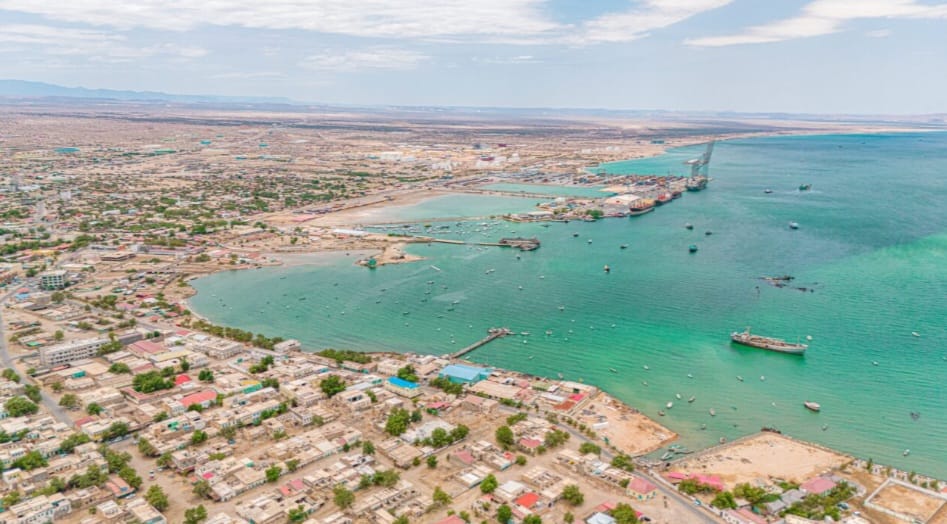
The Berbera Port in Somaliland, located on the Gulf of Aden, on August 21, 2024. Ethiopian recognition of Somaliland may ease tensions in the Horn of Africa. (Shutterstock/Abdulkadir Hirabe)
Why the US Should Encourage Ethiopian Recognition of Somaliland
Revisiting a recognition agreement could limit bloodshed in the Horn of Africa—but Washington must first facilitate diplomacy.
The Horn of Africa risks a new war amid an intense power struggle between the Ethiopian federal government and the separatist Tigray People’s Liberation Front (TPLF) in the Tigray Region. As Ethiopia renews its push for Red Sea access, clashes with the TPLF risk expanding into a broader confrontation with Eritrea. Further conflict in the Horn of Africa would be a strategic disaster for the West, cementing the influence of regional powers in an already sensitive maritime corridor.
Revisiting Ethiopian recognition of Somaliland could address Ethiopia’s Red Sea insecurity and reduce the spread of violence. Decisive action is needed from Washington, however, to encourage this dormant solution in the face of local opposition.
Unrest in Tigray has intensified as the federal government and the Tigray People’s Liberation Front compete to secure control of the region. Tigray, Ethiopia’s northernmost state bordering Eritrea, was the epicenter of a brutal war between 2020 and 2022: the 2022 Pretoria Agreement aimed to end the conflict, yet disagreements over power-sharing persisted.
By May 2026, the TPLF reinstated the pre-war Tigray regional council—a move that deepened the rift with the central government under Prime Minister Abiy Ahmed. Recent reports have emerged of forced civilian recruitment by the TPLF-aligned Tigray Defense Force, as fears of renewed fighting rise.
This ongoing crisis has provoked renewed hostilities between Ethiopia and Eritrea. Despite a brief alliance against the TPLF in the Tigray War, relations are once again strained. Addis Ababa has accused Asmara of backing the TPLF, a cooperation that is indeed likely to materialize should civil war break out.
Underpinning accusations of collusion lies a deeper source of tension—the Red Sea. The secession of Eritrea in 1993 left Ethiopia landlocked, a loss that continues to sour Ethiopia’s politics, both domestically and diplomatically. Abiy Ahmed’s increasingly urgent calls for access to the coastline have fueled Eritrea’s fears that the Port of Assab could become a target of Ethiopia’s maritime ambitions, causing further friction.
Revived fighting in the region not only risks large-scale humanitarian crises, but further threatens counterterrorism efforts against groups such as Al-Shabaab, consequences that the West cannot afford.
While conditions for conflict are ever-present, and maritime security perceived as existential, war is not inevitable. Somaliland declared independence from Somalia in 1991, yet has only been formally recognized by one UN member state—Israel. The country has operated as a de facto state for over three decades, with its own currency, airport and democratic institutions.
Signed on January 1, 2024, a memorandum of understanding reportedly envisaged granting Ethiopia access to around 20 kilometers (12 miles) of Somaliland coast in exchange for formal recognition. Although bilateral ties between Ethiopia and Somaliland remain warm, no meaningful steps have been taken to implement the MoU’s proposals. Following strong opposition from Somalia, the Turkish-brokered Ankara Declaration effectively sidelined Ethiopian recognition of Somaliland.
Currently, Ethiopia relies on Djibouti for around 95 percent of its import and export traffic, an expensive dependence. While the MoU promised Ethiopia access to Somaliland coast for a naval base, strengthened relations could also expand Ethiopia’s commercial access to Somaliland’s Port of Berbera. Development of the Berbera Corridor has made this an attractive alternative to reliance on Djibouti.
Washington should quietly encourage Ethiopian recognition of Somaliland. The UAE, the UK, and Ethiopia all hold stakes in the Port of Berbera; Somaliland serves as a promising partner for the West, particularly as China’s strong presence in Djibouti may expand into Ethiopia. In fostering dialogue between Ethiopia and Somaliland, the United States would be making an early investment in relations with Somaliland. This move could see long-term economic and strategic gains. Targeted US diplomacy is necessary to secure both Washington’s strategic influence in the region and demonstrate initiative in maintaining regional stability