 Medical Doctor | Writer | Political Commentator | Advocate for Somaliland’s International Recognition and Strategic Diplomatic Relations.
Opinion | International Relations | Horn of Africa.
President Hassan Sheikh Mohamud’s reported assertion that Somalia supported Gulf nations, including the United Arab Emirates, before their oil-driven prosperity deserves careful historical examination.
For centuries, the people of Somaliland maintained deep-rooted commercial, cultural and maritime connections with the Arabian Peninsula, long before the establishment of the Somali Republic in 1960 or the United Arab Emirates in 1971.
Somaliland’s historic ports of Berbera and Zeila served as major trading gateways connecting the Horn of Africa with Arabian markets. Generations of Somaliland merchants, pastoralists and seafarers built enduring relationships through livestock exports, maritime commerce and cultural exchange.
These connections were particularly well established with Yemen and the wider Arabian Peninsula, forming part of the regional trading networks that preceded the emergence of modern Gulf economies.
Historical studies by Pankhurst (1965) and González-Ruibal and colleagues (2022) demonstrate Somaliland’s longstanding participation in international trade.
While southern Somalia also maintained historical trading relationships with Arabia, it is important to recognise that British Somaliland and Italian-administered Somalia had distinct political and economic histories before their union in 1960.
Somaliland’s centuries-old commercial heritage cannot simply be presented as an achievement of a modern state that did not yet exist.
Equally, historical trade with the Arabian Peninsula should not be confused with proof that Somalia directly financed the emirates that later established the UAE. Such claims require credible historical evidence.
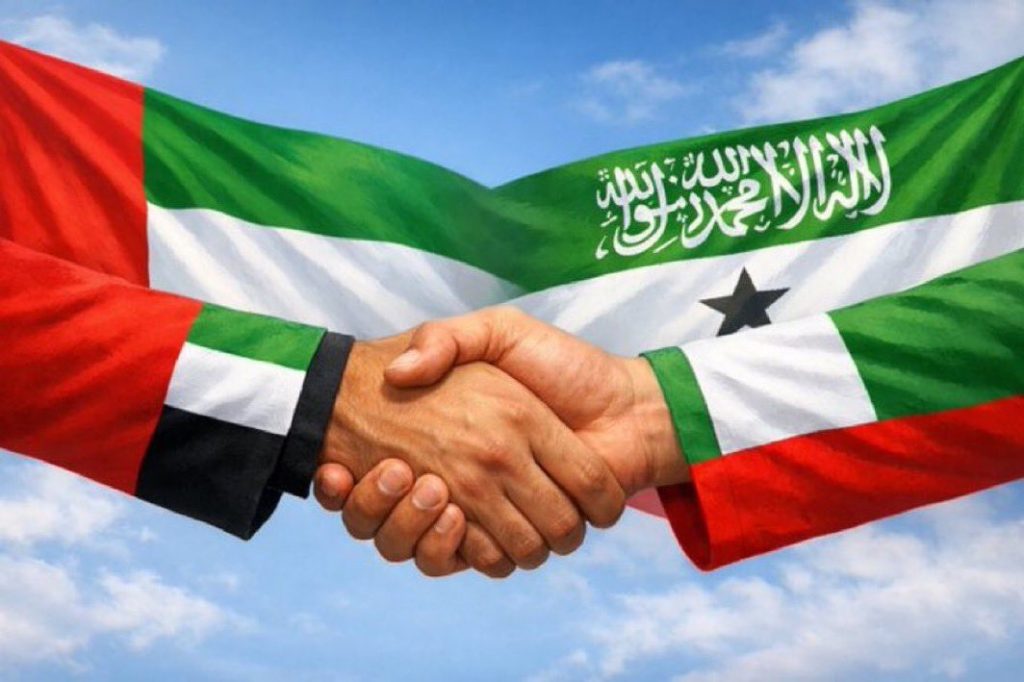
As a Somaliland medical doctor, writer and political commentator, I strongly support deeper diplomatic, economic and strategic relations between Somaliland and the United Arab Emirates.
Today, the UAE’s investment in Berbera’s port infrastructure reflects the continuing importance of Somaliland’s geographical position and its commercial engagement with Gulf markets.
Our shared future should be built upon mutual respect, economic opportunity, maritime cooperation and regional stability.
Somaliland’s historical relationship with the Arabian Peninsula is not a recent political creation. It is a legacy built over generations through commerce, trust and human connections.
President Hassan Sheikh Mohamud’s reported claims should therefore be considered in their proper historical context, with recognition given to the distinctive contributions of Somaliland’s people.
History must be respected, contributions must be acknowledged, and diplomacy must be guided by truth.
Somaliland looks forward to stronger partnerships with the UAE and the wider Gulf, founded on shared interests, mutual prosperity and lasting cooperation.
References,
1. Pankhurst, R. (1965). The Trade of the Gulf of Aden Ports of Africa in the Nineteenth and Early Twentieth Centuries. Journal of Ethiopian Studies, 3(1), 36–81.
2. González-Ruibal, A., et al. (2022). Nomads Trading with Empires: Intercultural Trade in Ancient Somaliland in the First to Seventh Centuries CE. American Journal of Archaeology, 126(1). https://doi.org/10.1086/718184
3. Government of the UAE. History of the United Arab Emirates. https://u.ae/en/about-the-uae/History.
About the Author;
Dr. Barre Jama is a British-Somali-lander medical doctor, writer and political commentator advocating for Somaliland’s international recognition and stronger diplomatic, economic and strategic partnerships with the United Arab Emirates and the wider Gulf region.
© 2026 Dr. Barre Jama. All Rights Reserved.
#Somaliland #UAE #GulfStates #SomalilandUAE #Berbera #Diplomacy #HornOfAfrica.
#everyone #Somaliland #followmeonfacebook #highlight Telefishanka Qaranka Somaliland Wasaarada Arrimaha Gudaha JSL Madaxtooyada JSL Khaalid Foodhaadhi