Hargeisa — Somaliland’s flagship infrastructure project gains momentum as regional trade ambitions grow
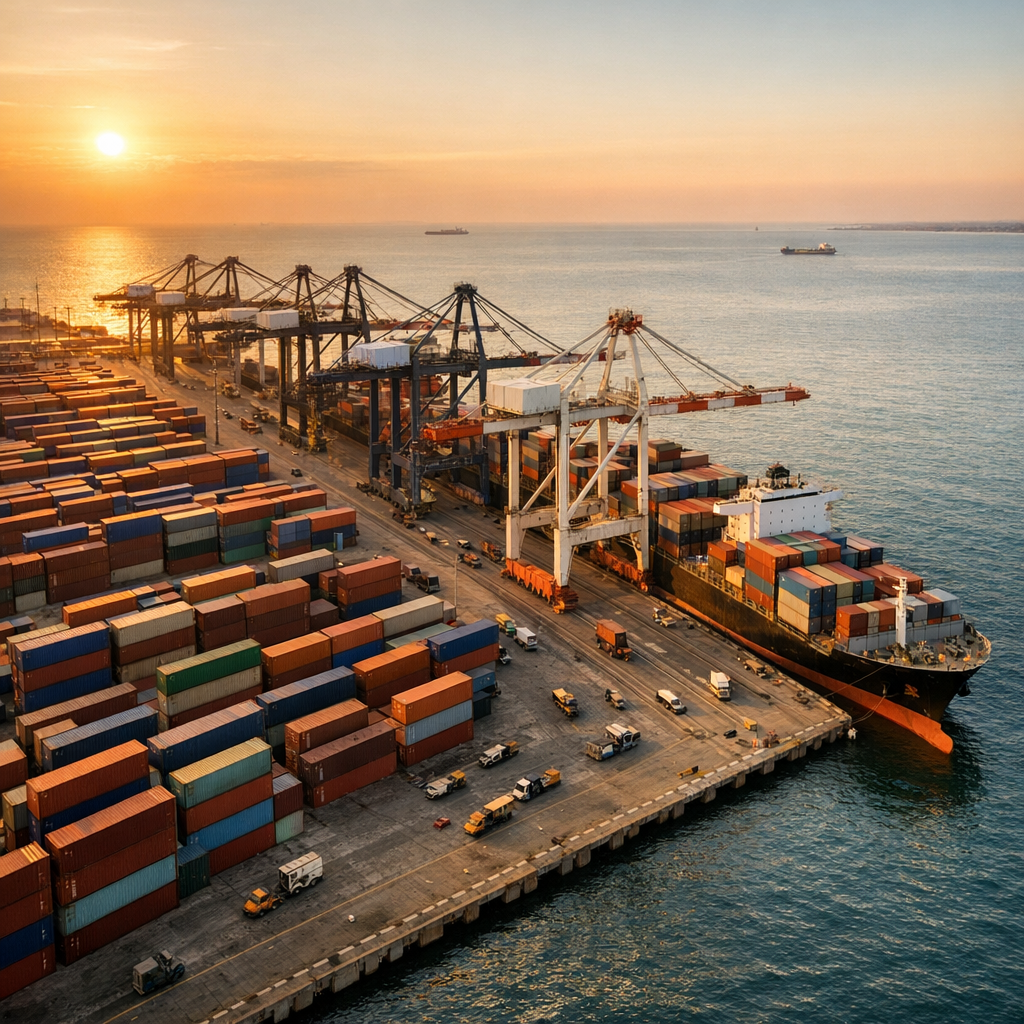
Hargeisa — Berbera Port, Somaliland’s most strategically significant economic asset, is advancing into a new phase of expansion and commercial development, with officials and regional analysts signaling that the facility is increasingly positioned as a transformative hub for Horn of Africa trade. The latest developments reflect a broader push by Somaliland’s government to leverage its geographic advantages at a moment of heightened regional interest in alternative trade corridors.
The port’s operator, DP World, has continued to deepen its infrastructure investment at Berbera, with ongoing upgrades to container handling capacity, berth improvements, and logistics facilities that officials say are bringing the port closer to its long-term potential as a major Indian Ocean gateway. Sources familiar with the development process indicate that the expanded terminal is expected to handle significantly higher cargo volumes in the coming years, drawing landlocked Ethiopian trade as well as regional transshipment business away from more congested rival ports.
Ethiopia Remains the Central Economic Relationship
At the heart of Berbera’s commercial prospects lies Somaliland’s evolving relationship with Ethiopia, its largest potential customer. The Ethiopia-Somaliland MoU signed in January 2024, which opened discussions around Ethiopian sea access and broader bilateral cooperation, injected fresh urgency into infrastructure planning along the Berbera Corridor. While diplomatic complexities have slowed full implementation, trade traffic along the corridor linking Berbera to the Ethiopian hinterland has continued to grow steadily.
Ethiopian importers and exporters have shown consistent interest in diversifying their port options beyond Djibouti, where bottlenecks and pricing have long been sources of frustration for businesses. Somaliland officials have framed Berbera not as a rival to Djibouti but as a complementary option that provides regional traders with greater flexibility, improved turnaround times, and competitive tariffs. Industry analysts note that even a modest shift in Ethiopian cargo toward Berbera would represent a substantial revenue windfall for Somaliland’s government, which is working to widen its fiscal base and reduce dependence on remittances.
Berbera Corridor Infrastructure Under the Spotlight
Road connectivity remains the critical bottleneck in unlocking Berbera’s full potential. The highway linking Berbera to Togwajaale on the Ethiopian border has undergone partial upgrading in recent years, but sections of the route remain inadequate for the volume and weight of commercial freight traffic that a fully operational corridor would generate. Somaliland authorities have been engaged in talks with development partners, including Gulf investors and multilateral institutions, about financing further road improvements that would make the corridor genuinely competitive on journey time and reliability.
Logistics operators active in the region have noted that warehousing and cold-storage facilities in and around Berbera also need expansion before the port can serve certain high-value export categories, particularly agricultural products from Ethiopia’s fertile highlands. Officials have pointed to these gaps as priority targets for incoming investment, with several expressions of interest reportedly received from private logistics companies in the Gulf and East Africa.
Djibouti Factor and Regional Competition
Djibouti’s dominance over Ethiopian trade has endured for decades, underpinned by deep infrastructure investment, the Addis Ababa-Djibouti railway, and long-established commercial relationships. However, the small nation’s near-total dependence on Ethiopian transit fees has also made regional planners acutely aware that any significant diversion toward Berbera would carry major economic consequences for Djibouti’s budget.
Regional observers suggest that rather than a zero-sum competition, the Horn of Africa may be moving toward a multi-port model in which Berbera, Djibouti, and potentially Lamu in Kenya each serve distinct segments of the landlocked Ethiopian market. Somaliland’s advantage lies in its closer geographic proximity to western Ethiopia and the relatively straightforward overland route through its territory, factors that translate into shorter transit times for specific cargo categories.
Somaliland’s Broader Strategic Bet
For Somaliland’s government, Berbera’s development is inseparable from its long-running pursuit of international recognition. Officials have consistently argued that demonstrating economic viability and regional utility — through a functioning, modern port that serves legitimate international trade — strengthens the case that Somaliland deserves to be treated as a sovereign state rather than an administrative curiosity.
The port’s expansion thus carries both commercial and diplomatic weight. Each new shipping line that calls at Berbera, each logistics agreement signed, and each infrastructure milestone reached is framed by Hargeisa as evidence of a functioning, credible state capable of fulfilling international obligations and contributing positively to regional stability.
As Somaliland’s leadership continues to push on multiple diplomatic fronts, Berbera remains the most tangible symbol of what the territory is trying to become — and the clearest argument for why the world should pay closer attention.
Berbera times