

 Resilience is victory,” goes a famous Somali proverb, and few places embody it like Hargeisa. Turned to rubble by intense bombings during a decade-long war with Somalia, this Somaliland city was rebuilt through domestic grit and community labour.
Somaliland, a breakaway region of Somalia that has enjoyed effective autonomy since it declared independence in 1991, is my home away from home. It is where my mother spent her early childhood and where some of my extended family still live. Though I was born in Bonn, Germany, and grew up in London, where I joined Reuters as a social media editor in 2019, I have regularly visited Hargeisa. Every time, I wish I had stayed longer.
Hargeisa translates as “the place where hides are sold” in Somali, and livestock remains the backbone of the economy, alongside remittances. But it is also a city where old meets new: People buy and sell lambs and goats through their phones, using mobile money to pay for food, clothing and much else.
Here’s how to experience Hargeisa like a local:
Getting around: Somaliland is a devoutly Muslim place where days start early, with the first call to prayer before sunrise acting as a natural alarm for many residents.
Walking is a great way to take in the atmosphere of the city. Though be warned: Roads and driving can be chaotic. Everyone is in a rush, so be aware of your surroundings and be mindful of manoeuvring cars, buses, motorbikes and even the occasional determined man with a wheelbarrow.
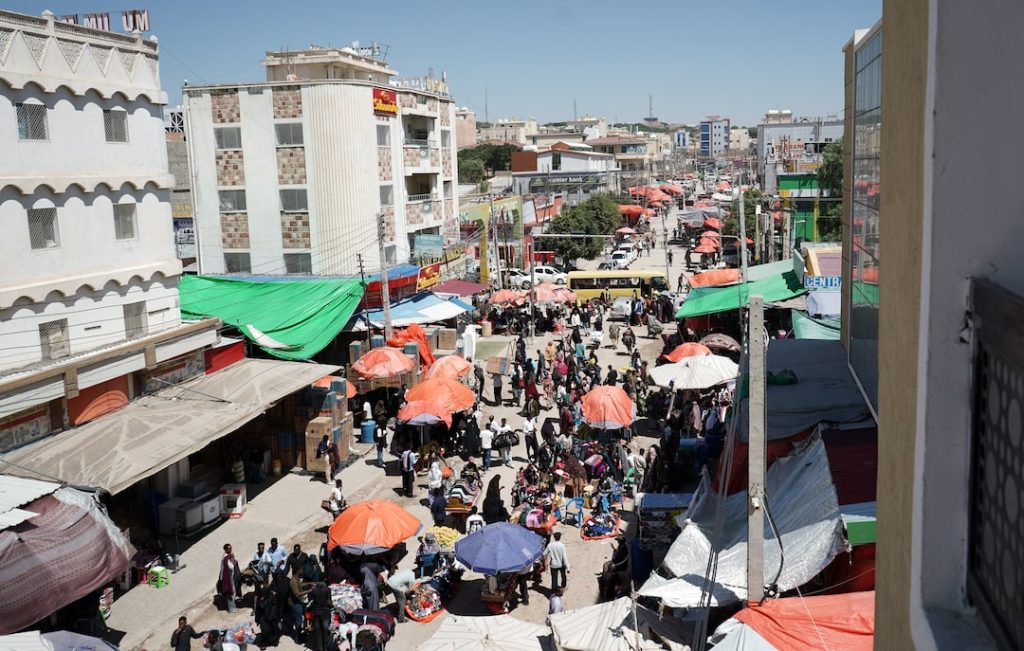
Item 1 of 17 People shop at an open-air market along a street in Hargeisa, Somaliland, a breakaway region of Somalia that has enjoyed effective autonomy since it declared independence in 1991. REUTERS/Mohamed Ahmed
[1/17]People shop at an open-air market along a street in Hargeisa, Somaliland, a breakaway region of Somalia that has enjoyed effective autonomy since it declared independence in 1991. REUTERS/Mohamed Ahmed
For a more local experience, take a minibus. It’s a hail and ride system, so just flag down the bus as you would a taxi, confirm it’s going to your destination, and let the driver know when you want to get off. Note that they can often be crowded.
For journeys outside of the centre, take a taxi or Dhaweeye, which translates as “closer” in English. They are always nearby and easily flagged off the street.
Mobile money is king: As is the case in many African cities, mobile money is the preferred payment method in Hargeisa and to pay for anything you will need your phone. You don’t need internet access; just ask which code to use and for the vendor’s number. You can also pay with cash, of course, but it may take a bit longer.
What to eat and drink: Many people make a living by selling their wares on the street. As you walk around the city, you will be called into restaurants and street stalls, where fruit sellers pile watermelons as tall as a person, and vendors fry potatoes.
Camel meat and camel milk are must-tries. Somalis have been eating camel for centuries, a tradition rooted in the land’s arid landscape. When crops and cattle perished, camels were the only ones to survive. For a traditional snack on the go, try dried camel meat, called muqmaad.
Walking is a great way to take in the atmosphere of the city. Though be warned: Roads and driving can be chaotic.
For breakfast, people enjoy stir-fried goat, lamb or beef liver with Somali pancakes (lahoox), or a flaky flatbread with honey that goes well with shaax, a spiced, aromatic tea made with camel milk that tastes very similar to chai. A favourite lunch is fragrant Somali rice (bariis) and meat, typically tender, bone-in goat or lamb — with a banana on the side.
Tea is at the heart of social life in Hargeisa, and you will regularly see people sitting outside tea houses, drinking and talking politics. With Ethiopia next door, you are never far from a good cup of coffee either. Try Social Cafe, one of several cafes in the city or, for a Somali twist, order Qaxwo, made with spices such as ginger, cinnamon and cardamom.
City landmarks: The Hargeisa War Memorial features a downed Somali Air Force MiG-17 aircraft. Located in Freedom Square, it is probably the city’s most recognisable landmark.
The livestock market offers a glimpse into one of the city’s main economic drivers, and is particularly interesting if you have never experienced the pastoral side of Somali culture. You’ll see large numbers of goats, sheep and camels being sold. Go in the morning to see it at its busiest.
If you are looking for entertainment, stop by the Hiddo Dhawr Cultural Centre. Founded in 2013 by Somali singer and activist Sahra Halgan, it often features live performances of Somali music and poetry.
For an authentic shopping experience, visit the Waheen Market, the city’s main commercial market, where you will find everything from mattresses and glassware to gold jewellery.
It’s also a great place to pick up a souvenir. One popular option is a dhill, a traditional wooden vessel used to store milk, usually adorned with leather straps and cowrie shells. Another is frankincense, an aromatic resin. Somaliland is one of the few places in the world where frankincense grows naturally. The gum is chewed for its health benefits, while the resin is traditionally burned to freshen homes and welcome guests.
Finally, no visit to Hargeisa is complete without a trip to the money market, a famous open-air street market where vendors trade bricks of local currency and US dollars. There are piles of cash as far as the eye can see — but with mobile money now the first choice, who knows how long it will be there.
Dress like a local: Hargeisa is a conservative place where people dress modestly. To fit in, try sporting some traditional dress. Women wear beautiful dresses called baatis with matching hijabs, often in tie-dye or other intricate designs, while men wear a sarong wrap decorated with traditional prints.
When to visit: If you are visiting during the summer months, when it is hottest, expect average temperatures of around 32 degrees Celsius (90 degrees Fahrenheit) during the day. In winter, temperatures reach about 26 C (79 F) at their highest, which is considered cool.
CITY MEMO
Click the link to read morehttps://www.reuters.com/city-memo/hargeisa-like-local-2026-10-17/