
Closing the Red Sea Gap: Somaliland–Israel Alliance and the Bab el-Mandeb Corridor
Mustafe Jambir
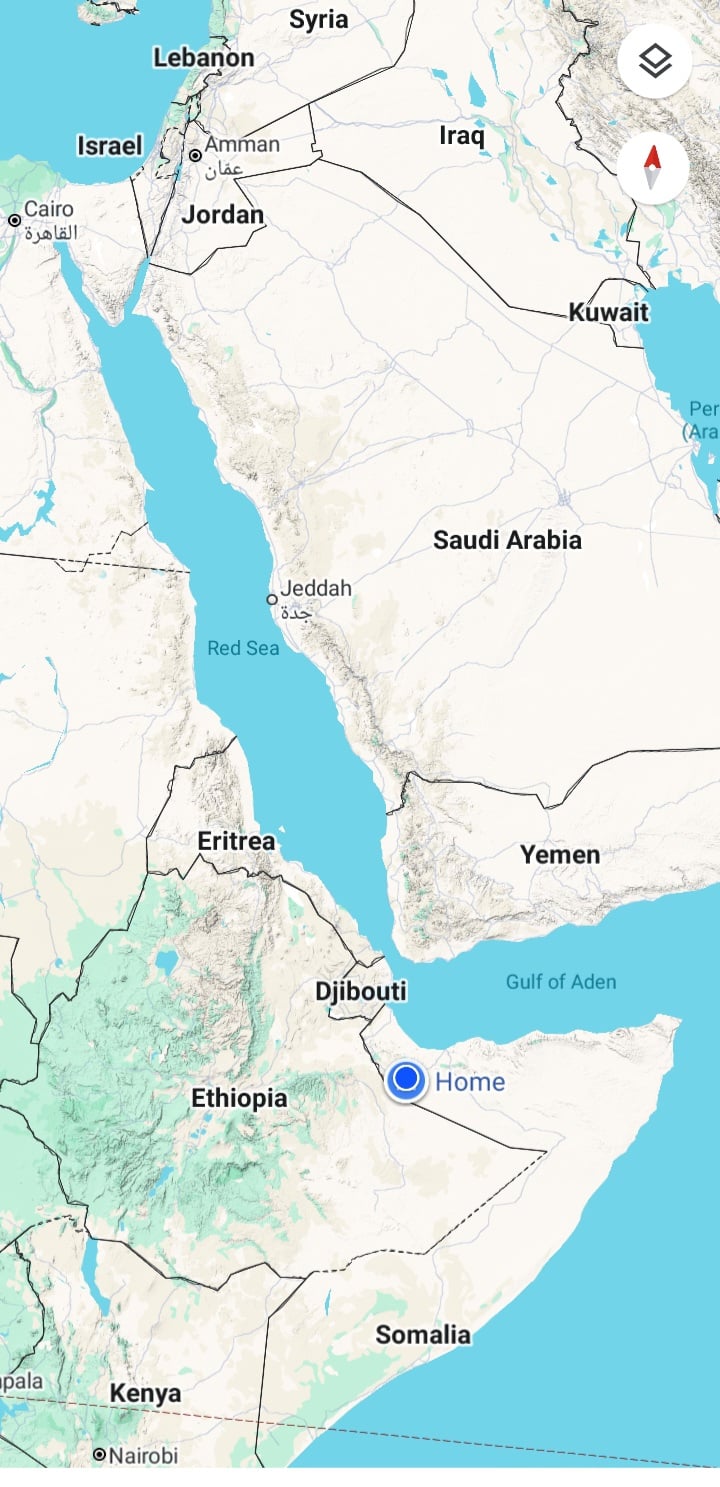
The Bab el-Mandeb corridor, connecting the Red Sea to the Gulf of Aden, has become one of the most contested maritime chokepoints in the world. Global trade, energy flows, and security converge here, yet instability and rivalries have left a strategic gap. Somaliland’s push for recognition, coupled with Israel’s maritime security imperatives and the support of Abraham Accord partners, offers a new axis of stability — one that directly challenges the dominance of Turkey, Somalia, Egypt, Djibouti, Saudi Arabia, and China.
Regional Contestation
Turkey and Qatar have entrenched themselves in Mogadishu, leveraging Somalia’s instability to project influence. Egypt guards its Suez Canal monopoly, wary of alternative maritime hubs. Djibouti rents its geography to foreign bases, while Saudi Arabia balances its Red Sea security with opposition to Israel and hesitation toward Somaliland’s independence.
China has emerged as the most formidable external actor. Through its Belt and Road Initiative, Beijing has invested heavily in Red Sea ports, railways, and logistics hubs. Its military base in Djibouti — the first overseas base of the People’s Liberation Army Navy (PLAN) — gives China a permanent foothold at the mouth of Bab el-Mandeb. This dual-use strategy, combining commercial expansion with military presence, positions China against any alliance that could dilute its influence or empower democratic actors like Somaliland. Beijing’s ambitions are clear: dominate maritime chokepoints, secure energy flows, and project power across Africa and the Middle East.
Together, these states resist recognition of Somaliland, fearing disruption of their strategic monopolies and spheres of influence.
Somaliland’s Strategic Leverage
Somaliland’s geographic position at the Gulf of Aden offers:
• Port access: Berbera as a potential hub for trade and naval logistics.
• Democratic governance: A contrast to authoritarian or unstable neighbors.
• Security reliability: A partner capable of countering piracy, terrorism, and illicit trafficking.
Recognition of Somaliland would close the “Red Sea gap” by inserting a stable, democratic actor into the maritime equation.
Israel’s Calculated Partnership
Israel’s security depends on uninterrupted maritime routes through the Red Sea.
An alliance with Somaliland provides:
• Maritime defense depth: Joint monitoring of Bab el-Mandeb against hostile actors.
• Strategic counterbalance: A partnership that undermines adversarial coalitions.
• Symbolic recognition: Strengthening Somaliland’s case internationally while reinforcing Israel’s regional alliances.
Abraham Accord Partners as Force Multipliers
The Abraham Accord countries — UAE, Bahrain, Morocco, and Sudan — expand the coalition’s reach:
• UAE: Advanced naval assets, logistics, and investment capacity.
• Bahrain: Maritime monitoring expertise transferable from the Gulf to the Red Sea.
• Morocco: Diplomatic reach in Africa, supporting recognition campaigns.
• Sudan: Geographic presence along the Red Sea, critical for corridor security.
Together with Israel and Somaliland, these states form a coalition that balances against Turkey, Somalia, Egypt, Djibouti, Saudi Arabia, and China.
Recommendations for a Joint Force Posture
Drawing inspiration from NATO’s Arctic strategies, Somaliland, Israel, and Abraham Accord partners could pursue the following measures:
• Expand early warning and maritime tracking
Deploy radar, satellite, and drone systems along Somaliland’s coast and Sudan’s Red Sea frontage.
(Key partners: Israel, UAE, Sudan, US)
• Develop uncrewed naval systems
Use drones and autonomous vessels to patrol chokepoints, counter piracy, and detect hostile submarines.
(Key partners: Israel, UAE, Bahrain, Somaliland)
• Field a denser monitoring network
Establish coastal sensor arrays, patrol vessels, and joint maritime command centers in Berbera and Port Sudan.
(Key partners: Somaliland, Sudan, Israel)
• Leverage commercial and military assets
Integrate Berbera and Port Sudan into global logistics chains, while hosting allied naval rotations.
(Key partners: Somaliland, UAE, Israel)
• Integrate Red Sea and Gulf of Aden operations
Coordinate naval doctrines across the Red Sea, Bab el-Mandeb, and Arabian Sea to strengthen deterrence.
(Key partners: Israel, Somaliland, UAE, Bahrain, US, EU)
• Counter China’s dual-use expansion
Develop alternative trade corridors and naval partnerships that reduce reliance on Chinese-controlled infrastructure.
(Key partners: Israel, UAE, Morocco, Somaliland)
• Diplomatic recognition campaign
Leverage Morocco’s African diplomacy and UAE’s global reach to push for Somaliland’s recognition, framing it as essential for corridor stability.
(Key partners: Morocco, UAE, Israel)
Toward Recognition Through Security
Recognition of Somaliland is not only a diplomatic act but a strategic necessity. By aligning with Israel and the Abraham Accord states, Somaliland can demonstrate its value as a stabilizing force in the Red Sea corridor. Together, they can close the Red Sea gap — ensuring that this vital artery of global trade is safeguarded against authoritarian monopolies and hostile coalitions led by Turkey, Somalia, Egypt, Djibouti, Saudi Arabia, and China.