Somaliland’s Government Ensures That Its Fauna Remains Among the Most Diverse and Healthiest in the Horn of Africa
Shutterstock
President Abdirahman Mohamed Abdullahi “Irro” arrived in Washington on September 5, 2026, the start of a nearly three-week visit to meet with U.S. policymakers and world leaders at the United Nations General Assembly, speak at think tanks, and meet with the Somaliland diaspora in the United States.
For the past 35 years, [Somaliland] has governed itself as an independent country with its own flag, currency, financial system, legal code, visas and passports.
Somaliland—a former British protectorate in the Horn of Africa—was independent for only five days in 1960 before an ill-fated merger with its Italian counterpart to form Somalia. In 1991, against after Somalia’s dictator waged genocide against Somaliland’s dominant Isaaq clan and as Mogadishu descended into famine and chaos, Somaliland decided it had enough and reasserted its independence. For the past 35 years, it has governed itself as an independent country with its own flag, currency, financial system, legal code, visas and passports. While Somalia continues to avoid one-man, one-vote elections, Somaliland has had eight, including one determined by 80 votes out of more than 400,000 cast. While Americans debate voter ID laws, Somaliland became the first to secure voter registration with biometric iris scans. It is home to multibillion-dollar telecom and mobile money companies, a Coca-Cola bottling franchise, and one of Africa’s prime deep-water ports.Republicans have rallied to Somaliland’s cause. In 2023, they successfully promoted Somaliland in the 2023 National Defense Authorization Act, requiring a reluctant State Department to report on relations with the would-be state. Republicans cheered first Taiwan’s outreach to Somaliland and then, on December 26, 2025, Israel’s formal recognition. Progressives, however, have been less enthusiastic for four reasons: Too many saw Somaliland as a Republican project; they deferred to Democratic Rep. Ilhan Omar of Minnesota, who comes from a rival clan to the Isaaqs; Israel’s lone recognition and false rumors that Somaliland would host displaced Gazans antagonized pro-Palestinian leaders; and the Democrats’ platform and agenda did not prioritize the military and security arguments made for U.S. recognition.
Beyond general progressivism and efforts to promote women’s empowerment, however, Democrats should have much to embrace in Somaliland’s environmentalism and conservation efforts in which, alongside Namibia and Rwanda, it has come to lead the continent. Importantly, it does so on principle and without significant tourism income or foreign aid. While critics sometimes argue that Somaliland is just a secessionist project of the United Arab Emirates, Shukri Haji Ismail Bandare, the former minister of the environment and climate change, frequently overrode Emirati pressure to release poachers and wildlife smugglers.
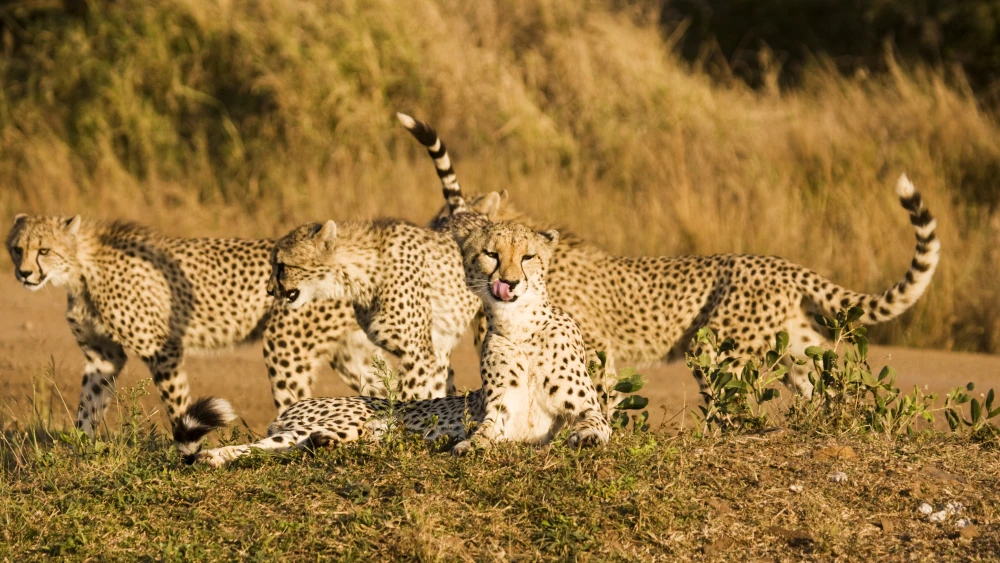
Successive Somaliland administrations have embraced cheetah conservation especially, rescuing cubs from smugglers and dedicating thousands of acres in a new facility to rehabilitate the cat officially designated as vulnerable, the category directly below endangered. In a recent visit to the cheetah conservation area, an hour’s drive outside the capital Hargeisa, I saw multiple groups of cheetahs and met some of the veterinarians—including Americans—doing regular blood draws, scat sampling, and other medical procedures to ensure Somaliland’s fauna remains among the most diverse and healthiest in the Horn of Africa.
Republicans can see in Somaliland a beachhead against extremism and Chinese encroachment; Democrats should see a beacon of democracy and environmentalism.
I spoke to Irro, former President Musa Bihi, and other officials who unite on a vision to build a national park in the Horn of Africa to rival those in the Serengeti and southern Africa.
The difference between drought and famine rests less on nature than on government capacity. Somaliland survives drought without famine because its democratic government protects aquifers and has cracked down on the climate-ravaging charcoal trade, from which Somalia profits by burning bushes and trees for profit even as desertification expands.
The strongest U.S. foreign policy is always bipartisan. During the era of President Ronald Reagan and House Speaker Thomas “Tip” O’Neill Jr., the two leaders from different partisan polls did not always share motives and emphasizes, but they cooperated, nonetheless.
Republicans can see in Somaliland a beachhead against extremism and Chinese encroachment; Democrats should see a beacon of democracy and environmentalism. Neither should look at Somaliland only through the lens of Israel-Palestinian politics or other agendas. Together, Somaliland could be the issue in which all Americans can once again find common ground.