
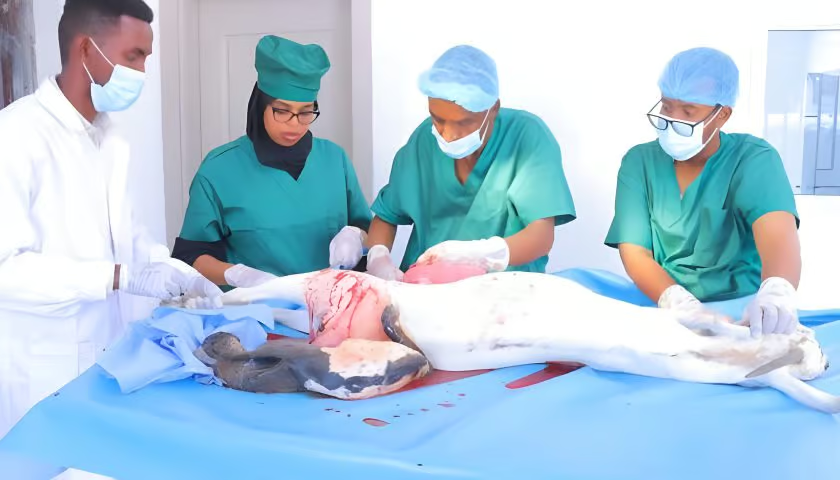
SOMALILAND – Somaliland’s Ministry of Livestock Development has carried out a successful cesarean section on a goat, marking a step forward in the country’s efforts to strengthen veterinary care and improve livestock productivity.
The procedure, performed at a newly established government veterinary facility, highlights growing technical capacity in animal health services, a critical pillar for pastoral livelihoods and food security.
The ministry said the operation was highly technical and conducted using modern medical equipment under strict sanitation standards.
The goat had been unable to give birth naturally, requiring surgical intervention to save both the animal and its offspring.
Officials noted that such procedures were previously difficult to access in many parts of the country due to limited infrastructure and veterinary capacity.
“This intervention demonstrates the ministry’s commitment to advancing veterinary care and safeguarding the wellbeing of livestock,” the ministry said in a statement.
The ministry added that strengthening access to such services is essential for pastoralist communities, where livestock are a primary source of income, nutrition and resilience.
Beyond emergency obstetrics, the facility is equipped to handle a range of advanced veterinary procedures, including fracture repair, treatment of severe injuries and other life-saving surgical interventions.
The ministry said expanding these capabilities is part of a broader strategy to modernise livestock health systems and reduce animal losses linked to preventable conditions.
Livestock production remains the backbone of Somaliland’s economy, supporting millions of pastoralists and contributing significantly to household incomes and national exports.
However, the sector continues to face challenges linked to limited veterinary coverage, disease burden and climate-related stress, all of which affect productivity and market access.
Improving veterinary services is increasingly seen as a key lever to address these constraints.
Access to timely interventions such as cesarean sections can significantly reduce mortality rates in small ruminants, which are widely kept across the region.
In systems where herd size directly determines household wealth, preventing the loss of breeding animals has an immediate economic impact.
The successful operation is expected to strengthen trust in public veterinary services, particularly among pastoralists who have traditionally relied on informal or limited animal healthcare options.
Authorities said continued investment in veterinary infrastructure and training will be necessary to scale these gains nationwide.
Expanding veterinary capacity across Africa
The development reflects a broader trend across Africa, where governments and development partners are investing in veterinary infrastructure and capacity to improve livestock health outcomes.
In countries such as Kenya and Ethiopia, efforts are underway to expand diagnostic networks, mobile veterinary clinics and disease surveillance systems, while also upgrading laboratory and surgical capabilities.
Advanced procedures like cesarean sections in livestock are not yet widespread in many rural areas, largely due to cost, limited expertise and infrastructure gaps.
However, their growing adoption signals a shift toward more professionalised and responsive animal health systems.
Strengthening veterinary care is also closely linked to wider industry goals, including improving feed efficiency, boosting reproductive performance and supporting disease control.
As African livestock systems modernise, access to quality animal healthcare is expected to play an increasingly important role in enhancing productivity, reducing losses and supporting more resilient food systems.
Source feedbusinessmea