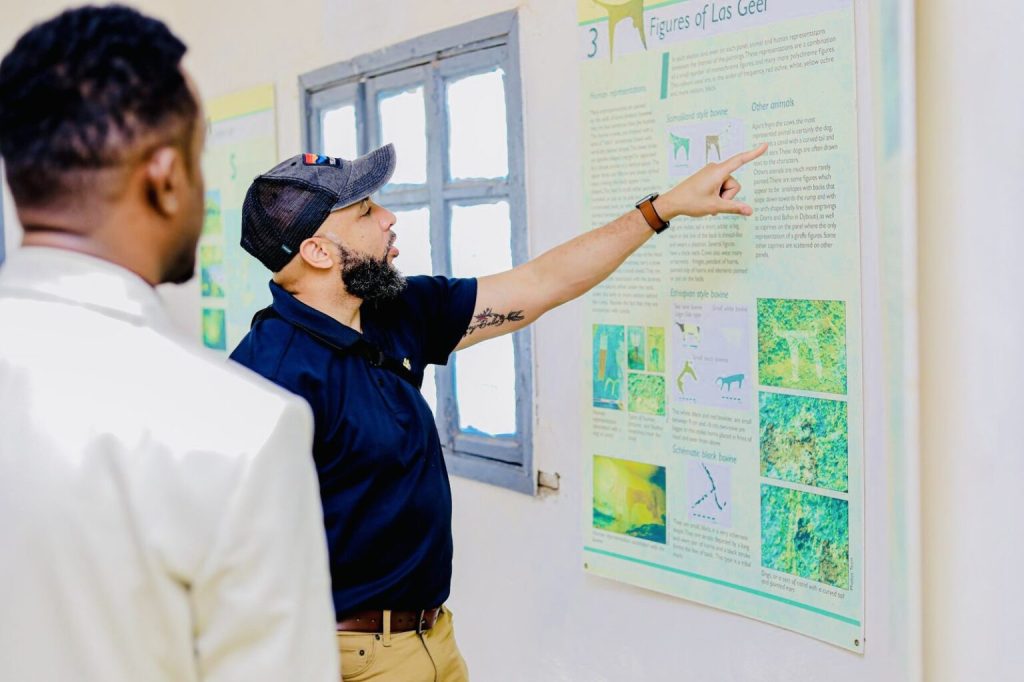
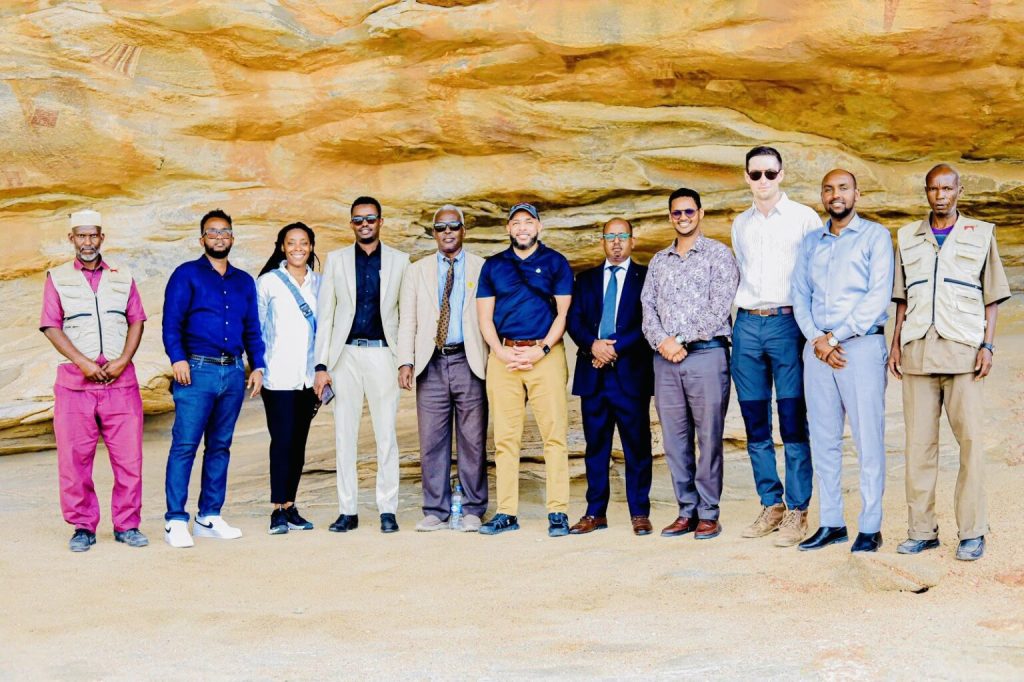
A senior U.S. diplomat visited the ancient Laas Geel rock art complex in Somaliland this week, highlighting the site’s archaeological significance and describing it as an important part of Africa’s historical heritage.
The visit was announced by the U.S. Embassy in Mogadishu, which shared photographs of embassy officials touring the renowned prehistoric site near Hargeisa. The delegation explored the cave paintings, which are believed to date back thousands of years and are regarded as some of the best-preserved rock art in Africa.
“Explored the stunning rock art at Laas Geel on Tuesday, cave paintings dating back thousands of years,” the embassy said in a statement posted on social media.
The embassy added that the site showcases “Somaliland’s rich archaeological heritage” and described Laas Geel as “an incredible piece of African history.”
The visit comes days after U.S. Chargé d’Affaires Justin Davis traveled to Somaliland for meetings with President Abdirahman Mohamed Abdillahi Irro and senior government officials, reflecting growing U.S. engagement with Somaliland on issues including regional security, economic development and cultural preservation.
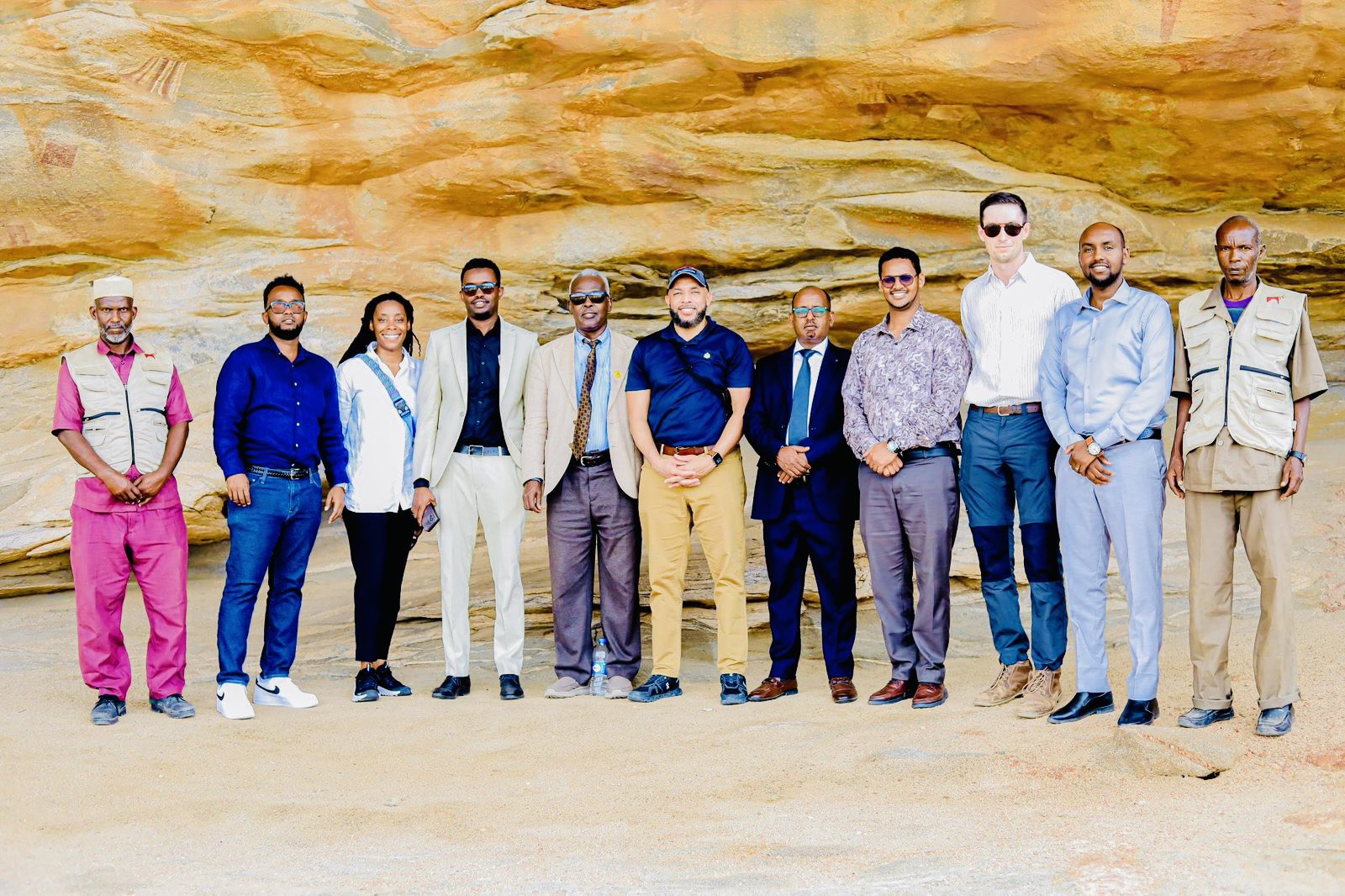
Photo: U.S. Embassy Mogadishu
Located about 50 kilometers northeast of Hargeisa, Laas Geel consists of a series of rock shelters containing vividly preserved paintings of cattle, human figures and wild animals. Archaeologists estimate some of the artwork dates back between 5,000 and 10,000 years, making it one of the Horn of Africa’s most important archaeological discoveries.
The site was first brought to international attention following its rediscovery by a French archaeological team in 2002. Since then, Laas Geel has attracted researchers, diplomats and tourists interested in the region’s ancient history.
Somaliland authorities have repeatedly called for greater international support to preserve and promote the site, which they regard as a symbol of the territory’s rich cultural legacy and historical identity.
The U.S. visit is likely to be viewed as another sign of Washington’s expanding engagement with Somaliland, following recent congressional interest and increased diplomatic contacts focused on the strategic Horn of Africa region.5
Source Horn Diplomat