The political, economic, and geopolitical landscape of the Horn of Africa is increasingly volatile, with global powers and regional states competing for strategic influence. From a geopolitical perspective, the Horn of Africa is increasingly interconnected with the broader geopolitical dynamics of the Greater Middle East. Consequently, developments across the Greater Middle East can have a direct impact on the security, political, and socio-economic dynamics of the Horn of Africa
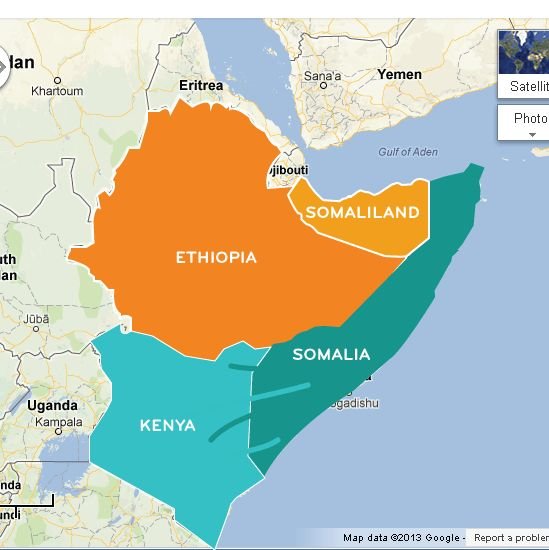
The Horn of Africa is a volatile region, historically affected by failed states, prolonged authoritarian rule, conflict, and political instability. In contrast, Somaliland has emerged as a beacon of stability and democratic governance in the Horn of Africa. Its strategic geographical location further increases its geopolitical importance.
Why Somaliland Matters Strategically?
There are several strategic realities that make Somaliland increasingly important to global and middle powers and create emerging opportunities for the country
First, Strategic geographical location: Somaliland is strategically located along the Gulf of Aden, near the Red Sea, with approximately 850 kilometers of coastline.
Second, Berbera Port and maritime access: The deep-water Berbera Port, together with Somaliland’s broader coastline, provides a strategically important maritime position suitable for commercial port development and potentially for military and logistical facilities.
Third, Proximity to critical maritime chokepoints: Somaliland is located close to the Bab el-Mandeb Strait, one of the world’s most important maritime chokepoints, connecting the Red Sea with the Gulf of Aden and the wider Indian Ocean. This geographical proximity gives Somaliland considerable strategic significance for global maritime trade and security.
Fourth, marine and coastal resources: Somaliland’s extensive coastline contains significant marine resources and provides opportunities for investment in fisheries, maritime industries, logistics, and other sectors that can attract international investment.
Fifth, Mineral and natural resources: Somaliland possesses potentially significant mineral resources, including rare earth elements and other underexplored natural resources. These resources could increase its attractiveness to global competitors seeking access to critical minerals and new investment opportunities.
Sixth, Political stability and democratic governance: Somaliland has maintained relative peace and political stability and has developed a system of democratic governance characterized by peaceful political transitions and elections. This distinguishes Somaliland from several states in the wider Horn of Africa.
Seventh, Maritime security: Somaliland’s Coast Guard plays an important role in monitoring and protecting its extensive coastline along the Gulf of Aden. It also contributes to wider maritime security efforts and the protection of international commercial shipping, despite having limited international assistance and resources.
These strategic realities are making Somaliland increasingly important to global and middle powers. Its strategic geographical location, political stability, proximity to the Bab el-Mandeb Strait, modernization of Berbera Port, marine and natural resources, and maritime security capabilities provide a strong foundation for deeper economic, diplomatic, and defense cooperation
Who are major Global Powers Competing for Influence in the region?
The major global powers competing for strategic influence in the Horn of Africa and the Red Sea include the United States, China, and Russia. Their engagement in the region is driven by a combination of security, economic, maritime, and broader geopolitical interests.
The United States
The United States has maintained a significant presence and strategic interest in the Horn of Africa for decades. Its engagement has included humanitarian assistance, development programs, diplomatic engagement, and counterterrorism efforts aimed at addressing extremist groups and protecting broader its national security interests.
However, the changing geopolitical environment is creating new strategic calculations for Washington. China has significantly expanded its presence in the region, including through its military base in Djibouti and its broader infrastructure and economic investments under the Belt and Road Initiative. Although China has financed major infrastructure projects across Africa, its growing economic engagement has created substantial economic relationships. However, some African countries have accumulated significant levels of debt to Chinese lenders and face challenges in servicing these obligations, raising concerns about debt sustainability and the potential for long-term strategic dependence.
This changing environment provides the United States with an incentive to diversify its strategic partnerships and strengthen its engagement with strategically located coastal states such as Somaliland, which is geographically positioned away from China’s military presence in Djibouti.
The United States has also had a historical connection with Berbera. During the Cold War, the United States used Berbera’s strategic facilities, while the port and military infrastructure later became associated with wider regional strategic competition. Today, the United Arab Emirates, a close U.S. ally, has played an important role in the development and modernization of Berbera Port and its surrounding infrastructure.
China
China has become one of the most influential external powers in the Horn of Africa. Its presence in Djibouti, combined with its investments in infrastructure, ports, roads, and other strategic sectors across the region, has significantly increased Beijing’s geopolitical influence.
China’s Belt and Road Initiative has strengthened its economic connectivity with countries across the Horn of Africa and the wider Red Sea region. Its expanding economic and military presence has consequently become an important factor in the strategic calculations of the United States and other global powers.
In this context, Somaliland’s geographical position provides an alternative strategic location for the United States to enhance its presence in the region and strengthen its position in the Gulf of Aden and the Red Sea, while maintaining a degree of strategic distance from China’s established military presence in Djibouti.
Russia
Russia also has a historical relationship with the Horn of Africa and the Red Sea. During the Soviet era, Moscow maintained a significant presence in the region and had a military base with Berbera in Somaliland.
Decades later, Russia is seeking to rebuild and expand its influence in the Red Sea, and the wider Horn of Africa, particularly interest to establish military base in Port Sudan. Moscow’s renewed interest in establishing strategic maritime access and strengthening its relations with regional states demonstrates that the Horn of Africa is once again becoming an important arena of global geopolitical competition.
Who are the Middle powers competing for Influence in the region?
There are five middle powers have significant influence in the Horn of Africa and seek to protect their security, economic, and strategic interests in the Red Sea.
1. Turkey
Turkey entered the Horn of Africa in 2011 through humanitarian diplomacy, providing humanitarian assistance to Somalia during its crisis. However, it has now moved beyond humanitarian diplomacy and has invested heavily in Somalia, including establishing its largest overseas military base in Mogadishu. Turkey’s main interest in the Horn of Africa is to expand its geopolitical, economic, and maritime influence near vital Red Sea trade routes, while using Somalia as its primary regional anchor.
For Somaliland, Turkey’s close ties with Somalia and opposition to Somaliland’s recognition reflect concerns over its strategic interests in the Red Sea and Gulf of Aden, as well as Israel’s growing regional presence and its relations with Somaliland, alongside potential concerns over the surveillance of sensitive facilities in Somalia, including its spaceport and missile-testing facilities.
2. Iran
Iran has direct influence in the Red Sea through its regional proxy networks notably the Houthis in Yemen, which pose a significant threat to the Bab el-Mandeb Strait and the Red Sea by targeting Western and Israeli-linked vessels. Iran’s main interests are to expand its regional influence, counter the Sunni Gulf states, pressure Western powers, and influence critical maritime routes in the Red Sea.
For Somaliland, the security situation created by Houthi activity backed Iran increases the strategic importance of its location along the Gulf of Aden and strengthens the potential value of maritime security cooperation.
3. Saudi Arabia
Saudi Arabia considers the Red Sea to be closely connected to its national security. It has maintained a long-standing rivalry with Iran in order to protect its interests in the Red Sea and the wider region. Saudi Arabia has developed relations with Djibouti and Eritrea and provides military and economic support to Yemen’s internationally recognized government and Sudanese forces led by General Abdel Fattah al-Burhan.
Saudi Arabia continues to oppose Somaliland’s recognition and maintains engagement with Somalia, while the UAE and Israel, both partners of Somaliland, and compete for influence in the Red Sea. However, Somaliland continues to seek Saudi and broader Islamic recognition, emphasizing that its relations with Israel do not undermine Arab and Muslim interests.
4. United Arab Emirates (UAE)
The UAE has made significant economic investments in Berbera Port and has maintained a military presence there. Its main interests in the Horn of Africa are securing critical Red Sea shipping lanes, expanding commercial logistics, and projecting geopolitical influence.
For Somaliland, relations with the United Arab Emirates create opportunities for economic cooperation, security partnerships, and broader international engagement.
5. Israel
Israel has increasingly developed a strategic presence in the region, particularly following its formal recognition of Somaliland. Israel’s primary interests in the Horn of Africa are securing vital Red Sea shipping lanes, countering threats from Iran and the Houthis, and expanding diplomatic and security alliances.
For Somaliland, cooperation with Israel creates a new diplomatic avenue to broaden its international position, strengthen its security and defense capabilities, and expand engagement with Western countries, particularly the United States.
Somaliland’s strategic choices and Emerging opportunities
Somaliland’s formal recognition by Israel in late December 2025 marked a significant development in it’s the global stage. However, Somaliland continues to seek broader international recognition, particularly from Western powers led by the United States. Its strategic location along the Gulf of Aden, proximity to the Bab el-Mandeb Strait, extensive coastline, relative political stability, and developing Berbera Port provide a strong foundation for deeper strategic engagement with Washington.
For the United States, Somaliland could offer a strategically located partner for strengthening maritime security, protecting international shipping, and responding to growing geopolitical competition in the Red Sea and the Horn of Africa. For Somaliland, closer strategic cooperation with the United States could create opportunities to strengthen its security capabilities, attract investment, expand diplomatic engagement, and advance its long-term objective of broader international recognition.
The strategic choice for Somaliland is therefore not simply to seek recognition, but to transform its geopolitical advantages into sustainable strategic partnerships. By positioning itself as a reliable partner for the United States in Red Sea security, Somaliland can convert its geographic position into geopolitical leverage while safeguarding its political interests and advancing its path toward broader international recognition.
Author: Mohamed Abdisamad Ibrahim Executive Director, Laasgeel Institute for Policy Studies and Research Analysis (LIPS) M.A. in International Relations and Diplomacy Geopolitical Analyst – Horn of Africa.