 Hargeisa Pursues Strategic Economic Partnerships as Recognition Campaign Gains Momentum
Hargeisa — Somaliland’s government has intensified its diplomatic and economic outreach to Gulf Cooperation Council member states in recent months, with senior officials holding a series of high-level meetings in the United Arab Emirates, Qatar, and Saudi Arabia aimed at securing both expanded trade relationships and formal or informal recognition of the self-declared republic’s status on the world stage.
The renewed push comes as Somaliland’s long-standing pursuit of international recognition enters what officials in Hargeisa are describing as a pivotal phase, with the government seeking to convert years of quiet diplomatic groundwork into tangible political and economic outcomes. The Horn of Africa territory declared independence from Somalia in 1991 but has yet to receive formal recognition from any United Nations member state.
Gulf States Emerge as Key Partners
Somaliland’s Foreign Ministry has confirmed that delegations traveled to Abu Dhabi and Doha over the past several weeks, engaging with both government counterparts and private sector actors. Officials indicated that discussions covered a broad portfolio of interests, including livestock export agreements, port infrastructure financing, and the possible establishment of consular-level representation — a step short of full diplomatic recognition but one that would significantly boost Hargeisa’s international standing.
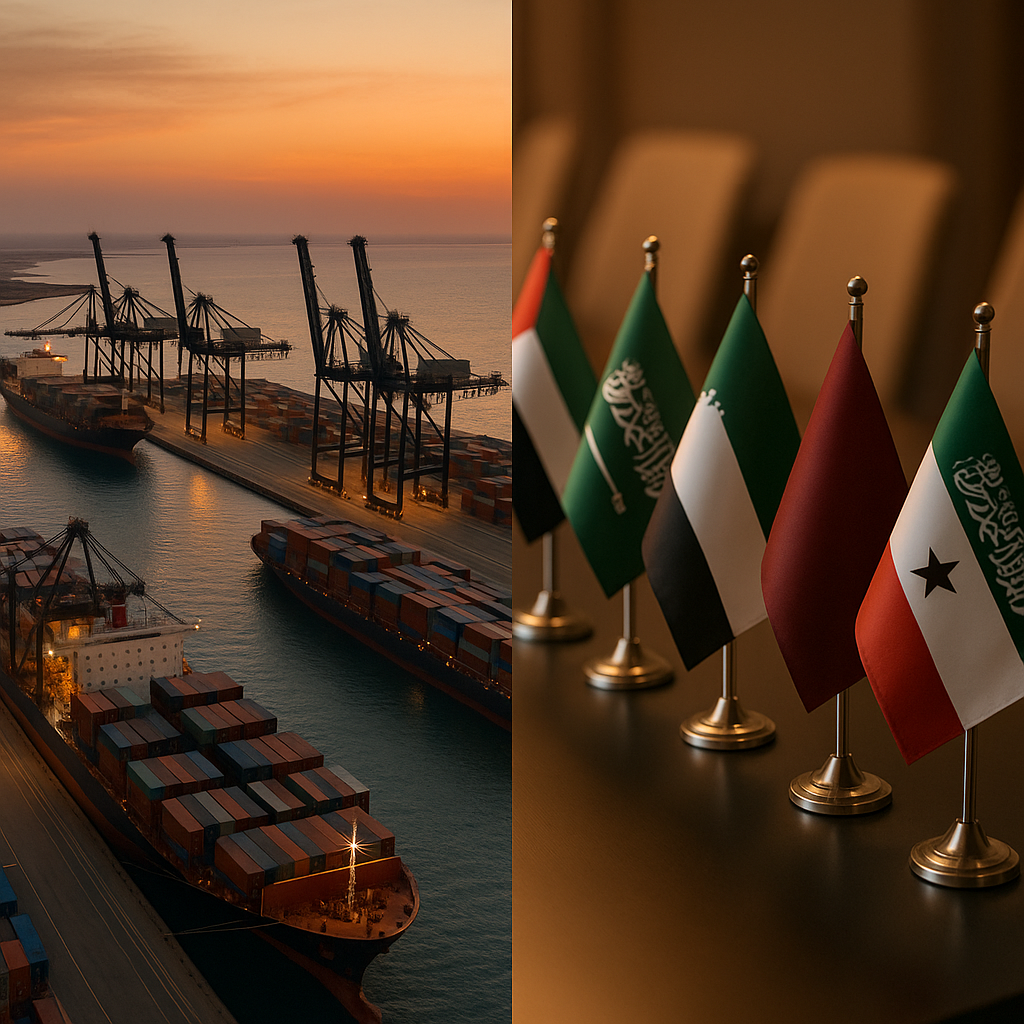
The UAE, which already maintains deep commercial ties with Somaliland through the DP World-operated Berbera Port and the Berbera Corridor, has emerged as the most active Gulf partner. Emirati officials are said to have expressed continued interest in expanding their investment footprint in Somaliland beyond the port sector, with energy and logistics identified as priority areas. Qatar, meanwhile, has shown interest in supporting humanitarian and development programming as a means of maintaining goodwill with Hargeisa.
Saudi Arabia’s engagement has centered primarily on livestock trade. Somaliland’s pastoral economy depends heavily on annual livestock exports to the Arabian Peninsula, and Hargeisa has been pressing Riyadh to formalize import arrangements that would give Somaliland exporters more stable market access and improved sanitary certification pathways. Industry representatives have welcomed the diplomatic attention, noting that unpredictable market access has historically constrained the sector’s growth potential.
A Broader Recognition Strategy
The Gulf outreach is part of a wider diplomatic strategy that Somaliland’s government has been executing with increasing sophistication. In parallel, Hargeisa has been engaged in ongoing conversations with partners in Europe and the United States, where Somaliland maintains representative offices that function in a quasi-diplomatic capacity despite lacking formal recognition.
Government spokespersons have framed the current moment as an opportunity shaped by shifting geopolitical currents. Growing international concern over stability in the Red Sea corridor, combined with renewed attention to the Horn of Africa as a region of strategic competition among global powers, has elevated Somaliland’s profile as a potential partner for states seeking reliable, stable interlocutors in an otherwise volatile neighborhood. Hargeisa has been careful to position itself as a democratic, secular, and cooperative actor — a contrast, officials suggest, to the instability that continues to plague much of the broader Somali political landscape.
Economic Diplomacy and Port Development
Central to Somaliland’s pitch to Gulf and international partners is the continued development of Berbera as a regional logistics hub. Expansion works at the port have progressed steadily, and officials say throughput volumes have increased markedly over the past two years. The government is actively soliciting additional investment in port-adjacent industrial zones, cold storage facilities, and the road corridor connecting Berbera to the Ethiopian border — an artery of growing importance given the large volumes of goods flowing between the port and landlocked Ethiopia.
The Ethiopia-Somaliland port access memorandum of understanding, while subject to ongoing diplomatic complexity, has kept the question of Berbera’s role as a gateway for Ethiopian trade firmly on the regional agenda. Hargeisa continues to view the Ethiopian relationship as foundational to its long-term economic and diplomatic strategy, even as the details of any formal arrangement remain a matter of negotiation.
Outlook
Analysts following Somaliland’s diplomatic trajectory caution that translating goodwill and informal partnerships into formal recognition remains an exceptionally difficult task within the current architecture of international law and African Union norms. Nevertheless, they note that Somaliland’s incremental approach — building economic interdependence, accumulating goodwill, and demonstrating institutional stability — represents a coherent long-term strategy. Whether Gulf partners or other states will be willing to take the step toward formal recognition in the near term remains to be seen, but for the moment, Hargeisa’s diplomatic calendar has rarely looked more active.
Berbera times