Somaliland seeks political leverage through Gaza troop offer

WASHINGTON
Somaliland’s initiative to offer up to 2,000 soldiers for deployment to Gaza appears less to be a straightforward military contribution to a proposed international force than an attempt by Hargeisa to leverage its strategic security and geographic position in pursuit of a wider political role.
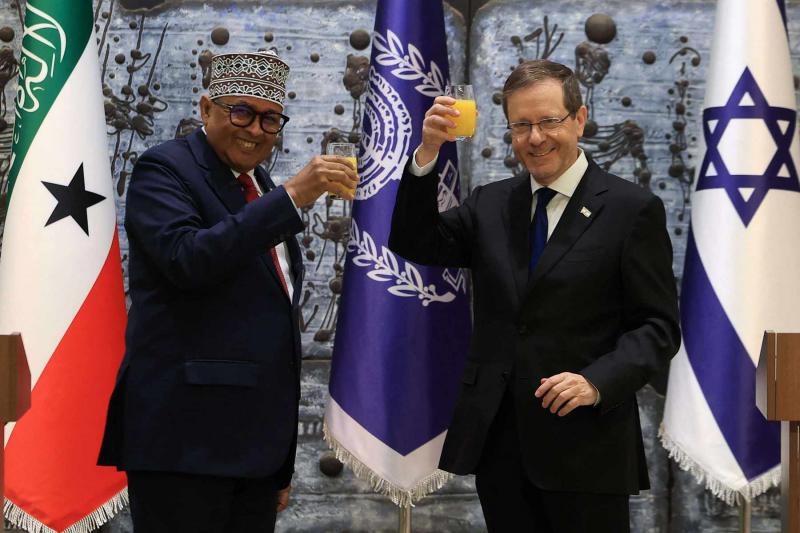
President Abdirahman Mohamed Abdullahi said Somaliland was prepared to provide troops if requested to do so by the United States or Israel, making clear that Hargeisa was not currently volunteering to join the force but would be ready to respond if it received a formal request.
The move comes at a sensitive time for Somaliland, which has sought international recognition of its independence since declaring a break from Somalia in 1991. Israel recognised Somaliland in December last year, becoming the first country to formally do so, but the decision has not so far triggered a wider wave of international recognition.
That gives any potential Somaliland participation in an international force in Gaza significance beyond the number of troops Hargeisa could provide.
For Somaliland’s leadership, the issue is about demonstrating that it can be a participant in regional and international security arrangements, rather than simply a political entity seeking recognition. If its forces were to take part in a multinational mission, Hargeisa could present itself to Western capitals as an actor capable of making a security contribution on an issue of exceptional sensitivity, potentially strengthening its political case with the United States and other countries.
The United States is planning an international stabilisation force for Gaza that could eventually number around 20,000 troops. Its proposed tasks include maintaining security, training Palestinian police, facilitating the delivery of humanitarian aid and preventing Hamas from returning to military control of the Gaza Strip.
Other countries have agreed or pledged to participate, including Uganda, with around 1,200 personnel, and Morocco, with up to 500, as well as personnel from Albania, Kazakhstan and Kosovo.
But Somaliland’s offer differs from those of internationally-recognised states because it carries a sensitive political question: can participation in an international mission become one of the tools for building legitimacy?
The presence of forces belonging to a territory that lacks broad international recognition in an international operation could give Hargeisa a level of visibility that traditional diplomatic channels have not provided. At the same time, accepting Somaliland’s participation could provoke objections from Somalia and regional states that remain committed to the country’s territorial unity.
The issue is made more sensitive by Somaliland’s location. It lies on the Gulf of Aden, across from Yemen and close to one of the world’s most important maritime routes, making it a focus of growing interest from international and regional powers in recent years.The port of Berbera and its position on the Gulf of Aden give Hargeisa a geopolitical asset that it has sought to turn into security and economic partnerships. Amid instability in the Red Sea and Bab al-Mandab, that geography has become more important to the United States, Israel and other countries concerned with the security of maritime traffic.
Somaliland’s offer of troops therefore cannot be separated from its efforts to develop relations with Washington.
Abdullahi has said Israel’s recognition has raised international attention towards Somaliland, even though it has not so far been followed by other recognitions.
Washington, meanwhile, faces more complicated calculations.
Recognition of Somaliland could damage its relations with Somalia’s federal government, an important partner in combating Al Shabaab and jihadist organisations in the Horn of Africa. Turkey, a prominent military and political ally of Somalia, has also rejected Israel’s recognition of Somaliland and reaffirmed its commitment to Somalia’s territorial integrity.
For that reason, accepting Hargeisa’s forces into a Gaza mission could become a political issue extending well beyond the borders of the Strip.
Hargeisa is also seeking to avoid linking its initiative to more sensitive regional issues.
Abdullahi has denied that there have been discussions with Israel or the United States about using Somaliland’s territory or airspace for operations against Houthi forces in Yemen. He has also denied any agreement to receive Palestinians from Gaza.
The denials reflect an awareness of the sensitivity of Somaliland’s position in regional power balances and a desire to prevent its security partnerships from becoming a source of further regional isolation.
The central question remains whether the offer to send 2,000 soldiers would actually produce political gains.
Participation in an international force could give Somaliland the image of an actor capable of contributing to security, but it would not automatically translate into recognition. Deploying forces beyond its borders would also test the military and political capabilities of its army, which the president estimates at around 25,000 soldiers. Somaliland has not previously contributed troops to African Union operations.
Even so, the initiative itself reveals a shift in the way Hargeisa is presenting itself.
Rather than limiting its case to a demand for recognition, Somaliland is seeking to portray itself as an actor that can perform a role in regional and international security arrangements. From that perspective, Gaza is more than a distant conflict for Somaliland; it is a potential opportunity to demonstrate that an entity seeking recognition can also offer a political and security contribution in return.
Hargeisa is therefore betting on a simple equation: strategic geography can be converted into influence, and influence can be converted into legitimacy.
The success of that equation, however, will depend on Somaliland’s ability to convince Washington that engagement with Hargeisa is not only about its demand for recognition, but also serves US interests in the Red Sea,
Somaliland seeks political leverage through Gaza troop offer
WASHINGTON
Somaliland’s initiative to offer up to 2,000 soldiers for deployment to Gaza appears less to be a straightforward military contribution to a proposed international force than an attempt by Hargeisa to leverage its strategic security and geographic position in pursuit of a wider political role.
President Abdirahman Mohamed Abdullahi said Somaliland was prepared to provide troops if requested to do so by the United States or Israel, making clear that Hargeisa was not currently volunteering to join the force but would be ready to respond if it received a formal request.
The move comes at a sensitive time for Somaliland, which has sought international recognition of its independence since declaring a break from Somalia in 1991. Israel recognised Somaliland in December last year, becoming the first country to formally do so, but the decision has not so far triggered a wider wave of international recognition.
That gives any potential Somaliland participation in an international force in Gaza significance beyond the number of troops Hargeisa could provide.
For Somaliland’s leadership, the issue is about demonstrating that it can be a participant in regional and international security arrangements, rather than simply a political entity seeking recognition. If its forces were to take part in a multinational mission, Hargeisa could present itself to Western capitals as an actor capable of making a security contribution on an issue of exceptional sensitivity, potentially strengthening its political case with the United States and other countries.
The United States is planning an international stabilisation force for Gaza that could eventually number around 20,000 troops. Its proposed tasks include maintaining security, training Palestinian police, facilitating the delivery of humanitarian aid and preventing Hamas from returning to military control of the Gaza Strip.
Other countries have agreed or pledged to participate, including Uganda, with around 1,200 personnel, and Morocco, with up to 500, as well as personnel from Albania, Kazakhstan and Kosovo.
But Somaliland’s offer differs from those of internationally-recognised states because it carries a sensitive political question: can participation in an international mission become one of the tools for building legitimacy?
The presence of forces belonging to a territory that lacks broad international recognition in an international operation could give Hargeisa a level of visibility that traditional diplomatic channels have not provided. At the same time, accepting Somaliland’s participation could provoke objections from Somalia and regional states that remain committed to the country’s territorial unity.
The issue is made more sensitive by Somaliland’s location. It lies on the Gulf of Aden, across from Yemen and close to one of the world’s most important maritime routes, making it a focus of growing interest from international and regional powers in recent years.
The port of Berbera and its position on the Gulf of Aden give Hargeisa a geopolitical asset that it has sought to turn into security and economic partnerships. Amid instability in the Red Sea and Bab al-Mandab, that geography has become more important to the United States, Israel and other countries concerned with the security of maritime traffic.
Somaliland’s offer of troops therefore cannot be separated from its efforts to develop relations with Washington.
Abdullahi has said Israel’s recognition has raised international attention towards Somaliland, even though it has not so far been followed by other recognitions.
Washington, meanwhile, faces more complicated calculations.
Recognition of Somaliland could damage its relations with Somalia’s federal government, an important partner in combating Al Shabaab and jihadist organisations in the Horn of Africa. Turkey, a prominent military and political ally of Somalia, has also rejected Israel’s recognition of Somaliland and reaffirmed its commitment to Somalia’s territorial integrity.
For that reason, accepting Hargeisa’s forces into a Gaza mission could become a political issue extending well beyond the borders of the Strip.
Hargeisa is also seeking to avoid linking its initiative to more sensitive regional issues.
Abdullahi has denied that there have been discussions with Israel or the United States about using Somaliland’s territory or airspace for operations against Houthi forces in Yemen. He has also denied any agreement to receive Palestinians from Gaza.
The denials reflect an awareness of the sensitivity of Somaliland’s position in regional power balances and a desire to prevent its security partnerships from becoming a source of further regional isolation.
The central question remains whether the offer to send 2,000 soldiers would actually produce political gains.
Participation in an international force could give Somaliland the image of an actor capable of contributing to security, but it would not automatically translate into recognition. Deploying forces beyond its borders would also test the military and political capabilities of its army, which the president estimates at around 25,000 soldiers. Somaliland has not previously contributed troops to African Union operations.
Even so, the initiative itself reveals a shift in the way Hargeisa is presenting itself.
Rather than limiting its case to a demand for recognition, Somaliland is seeking to portray itself as an actor that can perform a role in regional and international security arrangements. From that perspective, Gaza is more than a distant conflict for Somaliland; it is a potential opportunity to demonstrate that an entity seeking recognition can also offer a political and security contribution in return.
Hargeisa is therefore betting on a simple equation: strategic geography can be converted into influence, and influence can be converted into legitimacy.
The success of that equation, however, will depend on Somaliland’s ability to convince Washington that engagement with Hargeisa is not only about its demand for recognition, but also serves US interests in the Red Sea, the Horn of Africa and post-war arrangements in Gaza.


GOT IT! This website uses cookies to ensure you get the best experience on our website Skip to main content ArabWeeklyThe Arab Weekly Somaliland seeks political leverage through Gaza troop offer For Somaliland’s leadership, the issue is about demonstrating that it can be a participant in regional and international security arrangements, rather than simply a political entity seeking recognition. Sunday 13/09/2026 Israel’s President Isaac Herzog and Somaliland’s President Abdirahman Mohamed Abdullahi hold up glasses of beverage at the President’s Residence in Jerusalem, June 14, 2026. WASHINGTON Somaliland’s initiative to offer up to 2,000 soldiers for deployment to Gaza appears less to be a straightforward military contribution to a proposed international force than an attempt by Hargeisa to leverage its strategic security and geographic position in pursuit of a wider political role. President Abdirahman Mohamed Abdullahi said Somaliland was prepared to provide troops if requested to do so by the United States or Israel, making clear that Hargeisa was not currently volunteering to join the force but would be ready to respond if it received a formal request. The move comes at a sensitive time for Somaliland, which has sought international recognition of its independence since declaring a break from Somalia in 1991. Israel recognised Somaliland in December last year, becoming the first country to formally do so, but the decision has not so far triggered a wider wave of international recognition. That gives any potential Somaliland participation in an international force in Gaza significance beyond the number of troops Hargeisa could provide. For Somaliland’s leadership, the issue is about demonstrating that it can be a participant in regional and international security arrangements, rather than simply a political entity seeking recognition. If its forces were to take part in a multinational mission, Hargeisa could present itself to Western capitals as an actor capable of making a security contribution on an issue of exceptional sensitivity, potentially strengthening its political case with the United States and other countries. The United States is planning an international stabilisation force for Gaza that could eventually number around 20,000 troops. Its proposed tasks include maintaining security, training Palestinian police, facilitating the delivery of humanitarian aid and preventing Hamas from returning to military control of the Gaza Strip. Other countries have agreed or pledged to participate, including Uganda, with around 1,200 personnel, and Morocco, with up to 500, as well as personnel from Albania, Kazakhstan and Kosovo. But Somaliland’s offer differs from those of internationally-recognised states because it carries a sensitive political question: can participation in an international mission become one of the tools for building legitimacy? The presence of forces belonging to a territory that lacks broad international recognition in an international operation could give Hargeisa a level of visibility that traditional diplomatic channels have not provided. At the same time, accepting Somaliland’s participation could provoke objections from Somalia and regional states that remain committed to the country’s territorial unity. The issue is made more sensitive by Somaliland’s location. It lies on the Gulf of Aden, across from Yemen and close to one of the world’s most important maritime routes, making it a focus of growing interest from international and regional powers in recent years. The port of Berbera and its position on the Gulf of Aden give Hargeisa a geopolitical asset that it has sought to turn into security and economic partnerships. Amid instability in the Red Sea and Bab al-Mandab, that geography has become more important to the United States, Israel and other countries concerned with the security of maritime traffic. Somaliland’s offer of troops therefore cannot be separated from its efforts to develop relations with Washington. Abdullahi has said Israel’s recognition has raised international attention towards Somaliland, even though it has not so far been followed by other recognitions. Washington, meanwhile, faces more complicated calculations. Recognition of Somaliland could damage its relations with Somalia’s federal government, an important partner in combating Al Shabaab and jihadist organisations in the Horn of Africa. Turkey, a prominent military and political ally of Somalia, has also rejected Israel’s recognition of Somaliland and reaffirmed its commitment to Somalia’s territorial integrity. For that reason, accepting Hargeisa’s forces into a Gaza mission could become a political issue extending well beyond the borders of the Strip. Hargeisa is also seeking to avoid linking its initiative to more sensitive regional issues. Abdullahi has denied that there have been discussions with Israel or the United States about using Somaliland’s territory or airspace for operations against Houthi forces in Yemen. He has also denied any agreement to receive Palestinians from Gaza. The denials reflect an awareness of the sensitivity of Somaliland’s position in regional power balances and a desire to prevent its security partnerships from becoming a source of further regional isolation. The central question remains whether the offer to send 2,000 soldiers would actually produce political gains. Participation in an international force could give Somaliland the image of an actor capable of contributing to security, but it would not automatically translate into recognition. Deploying forces beyond its borders would also test the military and political capabilities of its army, which the president estimates at around 25,000 soldiers. Somaliland has not previously contributed troops to African Union operations. Even so, the initiative itself reveals a shift in the way Hargeisa is presenting itself. Rather than limiting its case to a demand for recognition, Somaliland is seeking to portray itself as an actor that can perform a role in regional and international security arrangements. From that perspective, Gaza is more than a distant conflict for Somaliland; it is a potential opportunity to demonstrate that an entity seeking recognition can also offer a political and security contribution in return. Hargeisa is therefore betting on a simple equation: strategic geography can be converted into influence, and influence can be converted into legitimacy. The success of that equation, however, will depend on Somaliland’s ability to convince Washington that engagement with Hargeisa is not only about its demand for recognition, but also serves US interests in the Red Sea, the Horn of Africa and post-war arrangements in Gaza. RELATED ARTICLE Israel-Lebanon direct talks in Rome delayed till October US marks 25 years since 9/11 attacks which have altered lives, policies UAE to harden AI infrastructure after Iranian attacks © 2015-2021 The Arab Weekly. All rights reserved. GOT IT! This website uses cookies to ensure you get the best experience on our website Skip to main content ArabWeeklyThe Arab Weekly Somaliland seeks political leverage through Gaza troop offer For Somaliland’s leadership, the issue is about demonstrating that it can be a participant in regional and international security arrangements, rather than simply a political entity seeking recognition. Sunday 13/09/2026 Israel’s President Isaac Herzog and Somaliland’s President Abdirahman Mohamed Abdullahi hold up glasses of beverage at the President’s Residence in Jerusalem, June 14, 2026. WASHINGTON Somaliland’s initiative to offer up to 2,000 soldiers for deployment to Gaza appears less to be a straightforward military contribution to a proposed international force than an attempt by Hargeisa to leverage its strategic security and geographic position in pursuit of a wider political role. President Abdirahman Mohamed Abdullahi said Somaliland was prepared to provide troops if requested to do so by the United States or Israel, making clear that Hargeisa was not currently volunteering to join the force but would be ready to respond if it received a formal request. The move comes at a sensitive time for Somaliland, which has sought international recognition of its independence since declaring a break from Somalia in 1991. Israel recognised Somaliland in December last year, becoming the first country to formally do so, but the decision has not so far triggered a wider wave of international recognition. That gives any potential Somaliland participation in an international force in Gaza significance beyond the number of troops Hargeisa could provide. For Somaliland’s leadership, the issue is about demonstrating that it can be a participant in regional and international security arrangements, rather than simply a political entity seeking recognition. If its forces were to take part in a multinational mission, Hargeisa could present itself to Western capitals as an actor capable of making a security contribution on an issue of exceptional sensitivity, potentially strengthening its political case with the United States and other countries. The United States is planning an international stabilisation force for Gaza that could eventually number around 20,000 troops. Its proposed tasks include maintaining security, training Palestinian police, facilitating the delivery of humanitarian aid and preventing Hamas from returning to military control of the Gaza Strip. Other countries have agreed or pledged to participate, including Uganda, with around 1,200 personnel, and Morocco, with up to 500, as well as personnel from Albania, Kazakhstan and Kosovo. But Somaliland’s offer differs from those of internationally-recognised states because it carries a sensitive political question: can participation in an international mission become one of the tools for building legitimacy? The presence of forces belonging to a territory that lacks broad international recognition in an international operation could give Hargeisa a level of visibility that traditional diplomatic channels have not provided. At the same time, accepting Somaliland’s participation could provoke objections from Somalia and regional states that remain committed to the country’s territorial unity. The issue is made more sensitive by Somaliland’s location. It lies on the Gulf of Aden, across from Yemen and close to one of the world’s most important maritime routes, making it a focus of growing interest from international and regional powers in recent years. The port of Berbera and its position on the Gulf of Aden give Hargeisa a geopolitical asset that it has sought to turn into security and economic partnerships. Amid instability in the Red Sea and Bab al-Mandab, that geography has become more important to the United States, Israel and other countries concerned with the security of maritime traffic. Somaliland’s offer of troops therefore cannot be separated from its efforts to develop relations with Washington. Abdullahi has said Israel’s recognition has raised international attention towards Somaliland, even though it has not so far been followed by other recognitions. Washington, meanwhile, faces more complicated calculations. Recognition of Somaliland could damage its relations with Somalia’s federal government, an important partner in combating Al Shabaab and jihadist organisations in the Horn of Africa. Turkey, a prominent military and political ally of Somalia, has also rejected Israel’s recognition of Somaliland and reaffirmed its commitment to Somalia’s territorial integrity. For that reason, accepting Hargeisa’s forces into a Gaza mission could become a political issue extending well beyond the borders of the Strip. Hargeisa is also seeking to avoid linking its initiative to more sensitive regional issues. Abdullahi has denied that there have been discussions with Israel or the United States about using Somaliland’s territory or airspace for operations against Houthi forces in Yemen. He has also denied any agreement to receive Palestinians from Gaza. The denials reflect an awareness of the sensitivity of Somaliland’s position in regional power balances and a desire to prevent its security partnerships from becoming a source of further regional isolation. The central question remains whether the offer to send 2,000 soldiers would actually produce political gains. Participation in an international force could give Somaliland the image of an actor capable of contributing to security, but it would not automatically translate into recognition. Deploying forces beyond its borders would also test the military and political capabilities of its army, which the president estimates at around 25,000 soldiers. Somaliland has not previously contributed troops to African Union operations. Even so, the initiative itself reveals a shift in the way Hargeisa is presenting itself. Rather than limiting its case to a demand for recognition, Somaliland is seeking to portray itself as an actor that can perform a role in regional and international security arrangements. From that perspective, Gaza is more than a distant conflict for Somaliland; it is a potential opportunity to demonstrate that an entity seeking recognition can also offer a political and security contribution in return. Hargeisa is therefore betting on a simple equation: strategic geography can be converted into influence, and influence can be converted into legitimacy. The success of that equation, however, will depend on Somaliland’s ability to convince Washington that engagement with Hargeisa is not only about its demand for recognition, but also serves US interests in the Red Sea, the Horn of Africa and post-war arrangements in Gaza. RELATED ARTICLE Israel-Lebanon direct talks in Rome delayed till October US marks 25 years since 9/11 attacks which have altered lives, policies UAE to harden AI infrastructure after Iranian attacks © 2015-2021 The Arab Weekly. All rights reserved. ShareThis Copy and Paste
The Arab Weekly