In the final week of July, reports circulated that Somaliland was close to securing a second formal recognition, this time from an African country, following that of Israel in late December.
Guinea-Bissau was said to be preparing to recognize the self-declared republic, a move that would have made it the first African country to do so.
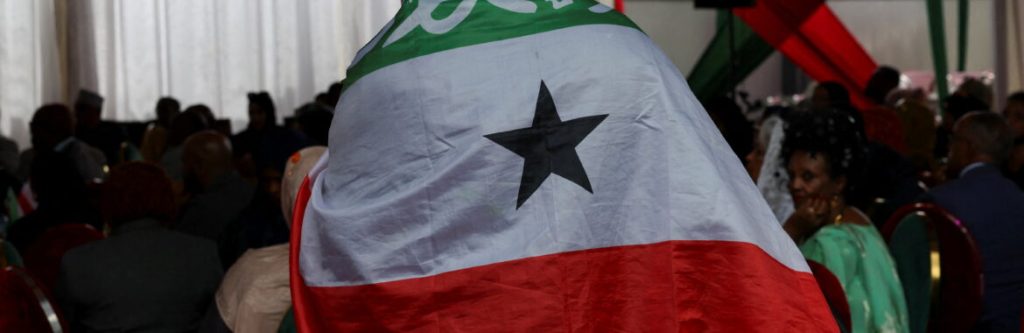
Somaliland has sought official recognition for more than three decades. It declared its independence from Somalia in 1991 after the collapse of the country’s central government and the outbreak of a civil war that has now entered its fourth decade.
Since then, it has pursued international recognition, setting itself apart from Somalia’s federal member states.
Such a move would have marked a departure from the longstanding position of the African Union and its member states, which have generally avoided decisions that affect the borders of fellow African states. The closest Somaliland came was in early 2024, when it signed a memorandum of understanding with Ethiopia that would have granted Addis Ababa access to a 20-km stretch of the breakaway state’s coastline under a long-term lease.
Then-Somaliland President Muse Bihi Abdi said the agreement was expected to pave the way for Ethiopian recognition. However, the deal failed to deliver the outcome Somaliland had envisaged after Addis Ababa and Mogadishu reached an agreement in Turkey, culminating in what became known as the Ankara Declaration.
The speculation around the second recognition, however, subsided after Guinea-Bissau’s Foreign Ministry issued a statement on July 26 denying the reports. The ministry said the West African state had “neither taken nor is considering any decision” to recognize Somaliland. Mada Masr has followed the reports and has spoken with senior officials familiar with the matter to establish whether diplomatic contacts took place between the two sides.
Speaking on condition of anonymity, two senior Somaliland officials familiar with the matter confirm to Mada Masr that Guinea-Bissau’s discussions with Somaliland representatives over possible diplomatic recognition collapsed after a last-minute intervention by Somalia’s federal government and several allied countries. Ministerial-level contacts between Guinea-Bissau and Somaliland officials had been underway for some time, a senior Somaliland official tells Mada Masr.
The official declined to say when discussions began or provide a precise timeline. According to the official, three senior Somaliland representatives, including the foreign minister, traveled by private jet to Guinea-Bissau for meetings with senior government officials. The source describes the initial talks as “successful” and says the delegation left the meetings optimistic that recognition was imminent.
The president of Somaliland, Abdirahman Mohamed Abdullahi, known locally as Irro, was awaiting an official declaration and expected a confirmation call from Bissau, the official says. But before that communication took place, Somalia intervened with support from Turkey, Egypt and Saudi Arabia, according to the source. The talks subsequently unraveled, the official says.
A senior Somali official involved in the diplomatic response confirms to Mada Masr that Somalia had received information that a high-level Somaliland delegation was in Guinea-Bissau.
The Somali official says Mogadishu contacted Guinea-Bissau’s foreign minister after learning of the visit.
According to the source, the Guinea-Bissau side denied that Somaliland officials were in the country and said Bissau had no intention of recognizing the territory.
The Somali official also says Somaliland representatives had lobbied Eswatini, South Sudan and other countries for recognition around the same time. Somalia responded through diplomatic efforts coordinated with what the source calls “friendly countries,” adding that those efforts had so far contained the recognition campaign.
According to the same source, the Somaliland lobbying effort is being supported and spearheaded by the United Arab Emirates and Israel. The latter offered Somaliland a diplomatic breakthrough. But despite initial expectations that other states would follow suit, the move has failed to deliver the outcome the leaders had hoped for.
In a July 29 interview with Universal TV, a local media outlet, Somali State Foreign Minister Ali Mohamed Omar said Mogadishu had been able to dissuade six countries from following Israel’s lead. Without naming the countries, he said Somalia had sent letters to their governments urging them not to recognize Hargeisa.
Ali expressed confidence that no African country or major international power would take such a step, but says Israel had lobbied several smaller countries.
Guinea-Bissau was not the first West African country Somaliland had approached. In 2019, Muse made an official state visit to Conakry, prompting Somalia to sever diplomatic ties with Guinea. An analyst who closely followed the episode tells Mada Masr that, around the same time, officials in Hargeisa had also reached out to Bissau. Although those efforts by Somaliland did not lead to recognition, Irro has repeatedly said that several countries are considering recognizing the territory.
In November, Irro sent letters to more than 190 United Nations member states, urging them to recognize Somaliland. Speaking during the celebration of June 26, the anniversary of the former British Somaliland protectorate’s independence in 1960, Irro acknowledged the limited response his diplomatic appeal has received. Of the 193 countries that received the letter, he said, only two, Denmark and Israel, had replied.
However, the diplomatic efforts of the Irro administration have intensified since Israel became the first country to recognize Somaliland in December. Since then, the relationship between Hargeisa and Tel Aviv has moved at speed and in full view. Before recognition, however, the relationship had largely remained behind closed doors. Irro made a secret visit to Israel in October, two months before recognition was officially announced. During a meeting with Irro, Israel’s Defence Minister Israel Katz said the relationship had been developing for years.
Israel then appointed Michael Lotem as its non-resident ambassador to Somaliland and Hargeisa appointed Mohamed Hagi, its former ambassador to Taiwan, as its emissary to Tel Aviv. Israeli Prime Minister Benjamin Netanyahu also extended an official state visit invitation to President Irro.
Irro made that visit in June. Over the course of the two-week visit in Israel, he met senior officials, including the president and Israel’s far-right Finance Minister Bezalel Smotrich, and signed a strategic declaration of cooperation with Netanyahu.
Having secured recognition for Somaliland, relations between Hargeisa and Tel Aviv enjoyed overwhelming support within Somaliland and across the political spectrum.
However, speculation as to how exactly Somaliland was able to secure Tel Avis’s recognition and at what cost has drawn some criticism, especially over the lack of a clear account from the government in Hargeisa.
Muse, who remains a powerful figure in Somaliland politics, has called on the government to release the terms of its agreement with Israel. In his first remarks on the issue during a video message in February, Muse discussed Turkey’s and Egypt’s responses to Israel’s recognition of Somaliland and accused Ankara of undermining talks between Somalia and Somaliland. However, his central demand was directed at the government in Hargeisa.
“The government has not yet disclosed what we agreed with Israel, and it is expected to do so,” Muse said in an interview with local media. “If the agreement violates Somaliland laws, harms Muslims, causes suffering to other Muslim people, or is not an agreement between equal parties, it will be discussed.”
Muse returned to the issue in June in a social media post that drew broad attention. He called for an assessment of the agreements, the changes taking place around Somaliland, and the risks they might pose to its national interest.
“It is essential to thoroughly assess the implications and likely outcomes of the agreements and the changes unfolding now in order to avoid political uncertainty,” he wrote. “The state … must therefore carefully examine the potential impact of these global developments, so as to avoid a political miscalculation.”
Another issue that has raised concern in Somaliland over the Hargeisa-Tel Aviv relationship is the decision to base Somaliland’s diplomatic mission in the contested city of Jerusalem. The government has faced criticism over the decision, with the main opposition parties rejecting the office’s proposed location. However, Irro defended his government’s decision while speaking at a meeting of the ruling party’s Central Committee, saying the office was located in West Jerusalem, which falls within Israel’s regionally and internationally recognized borders.
The president’s explanation did not satisfy the opposition, who, despite supporting the mutual recognition between Israel and Somaliland, drew a clear distinction between establishing diplomatic ties and locating Somaliland’s office in Jerusalem.
Mahmoud Hashi Abdi, the chai of the Kaah Party, told local media that his party had initially sought clarification about the nature of Somaliland’s relationship with Israel. It also asked whether the president had made any specific commitments to Israel and whether any agreements were currently under negotiation.
According to Mahmoud, during a meeting with the three national political parties, the president assured them “there are no conditions and no agreements that we will enter into until we are in a stronger position.”
“The Kaah Party rejects and opposes the opening of a Somaliland office in the holy city of Jerusalem,” Mahmoud says, explaining his party’s position. “We are unequivocally against it.”
The relationship between Israel and Somaliland, as well as Hargeisa’s diplomatic manoeuvres, has irked Mogadishu. Since December, Somalia’s government has sought support from Muslim-majority countries and key regional allies in a diplomatic campaign aimed at containing the recognition and discouraging other countries from recognising Somaliland.
Two Egyptian officials tell Mada Masr that Egypt is working with Saudi Arabia to reach out to other African countries with a simple message: if secession is tolerated with Somaliland, it will not be the only case.
“Clearly this is something that will resonate with every African leader, especially those in East Africa,” one of the officials says.
Madamasr